
Hearing from the Deaf: A Panel on CeCe Bell's, El Deafo
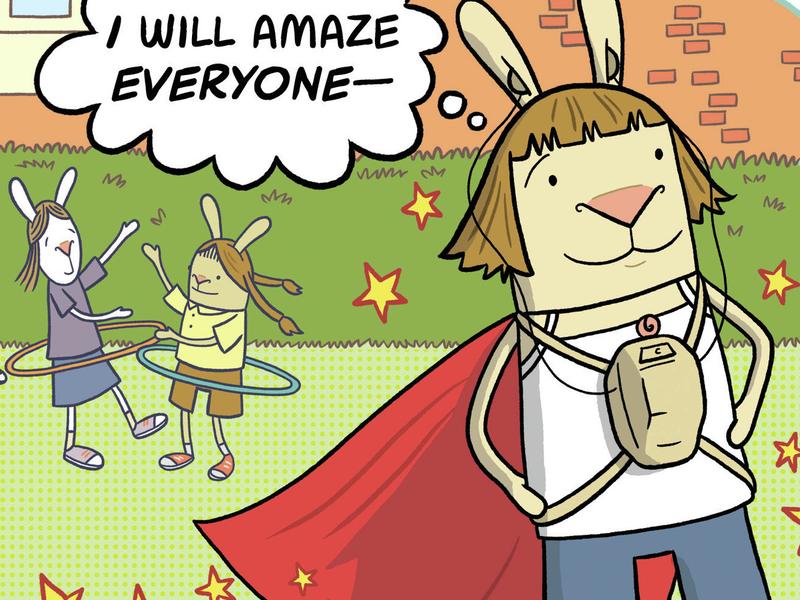
On Monday, September 26th, 2016 from 7:00 to
8:30 p.m. in McCarthy Arts Center, the education department presented its 4th
annual common read to explore deafness in Cece Bell’s, El Deafo. The panelists included Bill Hudson, Blair Rasmus,
Margaret Sicotte, Jonathan Silverman, and Rayona Silverman. Bill Hudson was
born with severe hearing loss and has served on many boards, advisory councils
and committees related to the recognition and growth of the Deaf and Hard of
Hearing community. Blair Rasmus is a genetically deaf, fourth-generation in her
large deaf family, and is a native user of American Sign Language. Margaret
Sicotte is an audiologist that works in a cochlear implant program. Finally,
Jonathan Silverman is the father of Rayona who was born with hearing loss and
now has two cochlear implants. The event catered to every audience member
because there were three translators available for any deaf members viewing the
panel.
One of
the major points of the panel was how deafness contributes to the panelists’
identities. Rayona stated that being deaf is a part of who she is, and it only
makes her stronger. Moreover, it makes her see people in a new light. Blair
compared being born into a deaf family tot being born into a family with a
different language. She never views deafness as a disability. Jonathan stated that having a daughter with
deafness made him appreciate hearing much more—something that a lot of people
take for granted. Teachers need to be aware of, and recognize, the differences
amongst their students because each student has unique qualities that make up
his or her identity. This tagged this blog post to PC 7.2 because I need to have knowledge about the learners in my classroom, in terms of their needs, in order for them to fully learn in my class. I also tagged this blog post to PC 10.1 because my placement has shown me how I can collaborate with my learners and their parents in order to meet their specific needs in the classroom.
Each
panelist also noted how important it was to read El Deafo by CeCe Bell because the protagonist and her experiences
are very relatable. Rayona appreciated that CeCe has a positive outlook on being
deaf. When she was younger, Rayona hated being deaf because it made her
different. A moment that stood out to her was when she was in eighth grade. She
was walking down the hall when a third grader stopped her and asked her what
those “things” were on her ears. The third grader then followed up the question
with a rude remark about how they made her look weird. Rayona observed that
after reading El Deafo, comments like
the one she received in eighth grade did not bother her as much anymore. Rayona
was able to relate to CeCe’s experiences and Cece made her realize that she was
not alone. Incorporating books with diverse characters into a classroom is key
in making all students feel accepted. Bill mentioned that it was a wonderful
book all around because the books he typically reads with deaf characters focus
on self-pity. In contrast, this book focused on embracing a difference.
Margaret accurately summed up everyone’s opinions about the book when she
stated that although the devices to assist deaf people have changed, the
overlying message of the book is still relevant today.
Finally,
the question and answer portion of the event underlined the classroom
implications for deaf students. Blair mentioned that teachers should find out a
deaf student’s preferred method of communication. It is vital that they find
out what his or her needs are. Rayona added to this by stating that this should
be conveyed in a one-on-one conversation and a teacher should not make a big
deal out of the fact that they are deaf. Overall, the intent of education is to
get to know your students and to recognize their differences. Rayona concluded
the panel by stating how important it is to be kind to one another and to
embrace other’s differences--you never know how much your words can impact on
others. As a future educator, I want to build a community in my classroom in which everyone's differences are recognized. To do so, I will often have open discussions about what makes us unique and incorporate books like El Deafo into my curriculum.
Holding open discussions in the classroom is essential to making each student feel comfortable and engaged with the rest of the class. In my placement at Vermont Commons School, there is a deaf student with cochlear implants. At the beginning of each class, I have observed that the teacher fosters an open conversation about each student's personal life, rather than diving right into the textbook. This deaf student seemed completely comfortable with sharing personal information with others. I plan to do a similar thing to my placement teacher in my future classroom because if my students feel comfortable in my classroom, they are more likely to thrive in their learning journeys.
Holding open discussions in the classroom is essential to making each student feel comfortable and engaged with the rest of the class. In my placement at Vermont Commons School, there is a deaf student with cochlear implants. At the beginning of each class, I have observed that the teacher fosters an open conversation about each student's personal life, rather than diving right into the textbook. This deaf student seemed completely comfortable with sharing personal information with others. I plan to do a similar thing to my placement teacher in my future classroom because if my students feel comfortable in my classroom, they are more likely to thrive in their learning journeys.

Bailey, I really admire how much you are willing to accommodate difference in the future. I wonder if all your students will feel comfortable being different in your class thought; your class may be a safe environment to be an individual, but outside of the class they might be afraid, too.
ReplyDeleteBailey - I really appreciated how much you captured about the lessons panelists shared. It is clear that you were influenced by the reading and panel and that is powerful.
ReplyDelete